
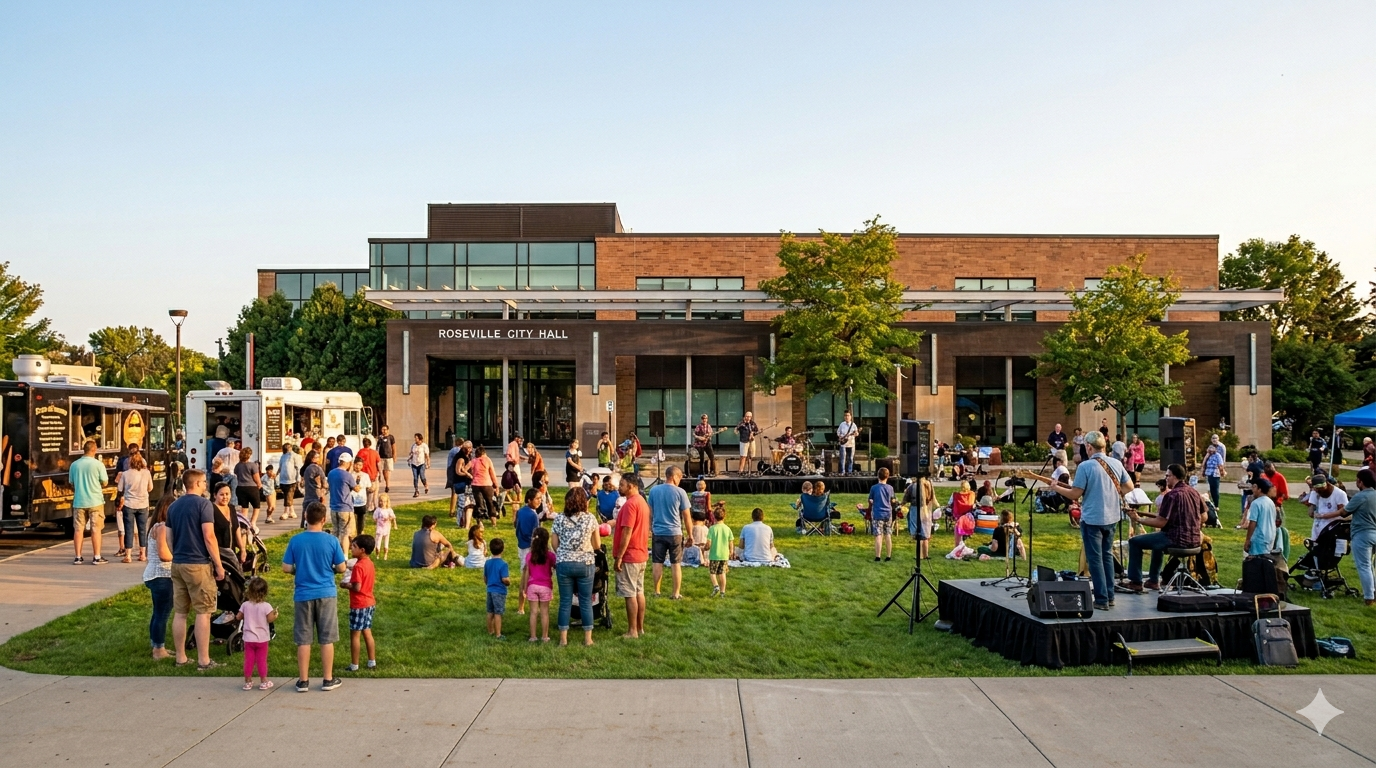
WHY YOUR VOTE MATTERS
Your city council vote is more powerful than you think
A note from Cassie
“I get it. Local elections can feel like a footnote, especially when the news is dominated by what's happening outside of Roseville. But I've learned the decisions closest to home are often the ones that affect you most. Your city council vote shapes the streets you drive, the parks our kids play in, and whether you can afford to keep living here. It matters. And in Roseville, it's easier to vote than you might think.”
— Cassie Iverson, candidate for Roseville City Council

What the City Council actually controls and what it doesn't
The City of Roseville operates under a council-manager plan comprised of a mayor and four council members, each serving four-year terms with a single, equal vote. They set policy, approve the budget, and make the calls that shape daily life in Roseville.
Here's what that actually means in practice:
- →Your property taxes. The 2026 city budget totals $82.8 million and covers police and fire service, water and sewer, roads, and parks and trails. The council decides how that money gets spent and sets the levy that determines what you pay.
- →Your neighborhood. Zoning decisions, development approvals, and land use policy are all council decisions. What gets built next to you, and what doesn't, starts here.
- →Your streets and sidewalks. Road repairs, pathway construction, snow plowing — the council sets the priorities and the budget for all of it.
- →Your parks. Roseville maintains 679 acres of parkland: the Oval, Central Park, neighborhood parks and trails. Investment decisions come from the council.
- →Your public safety. Police and fire staffing levels, policy direction, and budget allocation are all council decisions. The council is actively deciding right now how to sustain public safety staffing as federal grant funding runs out.
- →Housing policy. Short-term rental regulations, tenant protections, ADU ordinances — if you've wondered why the house down the street became an Airbnb, that's a council conversation.
- →Climate and sustainability. The council approves sustainability plans, budgets for environmental programs, and sets the standards new development must meet. Roseville's Climate Equity Action Plan is on the council's desk right now.
Your most powerful vote is the one most people skip
Minnesota is truly one of the best states in the country to vote in, leading the nation in presidential election turnout in every election since at least 2004.
But even here, local races get skipped. People show up for the governor and leave the city council box blank, not because they don't care, but because they didn't know there was a race, didn't recognize the names, or didn't have enough information to feel confident making a choice. The result is that your neighborhood gets shaped by a fraction of the people who actually live there, whoever took the time to vote on the whole ballot.
In 2026, the governor, a U.S. Senate seat, District seats, Roseville Mayor, and city council are all on the ballot on November 3. More neighbors will show up than in a typical local election, so be one of them.
Your city council vote is your most direct say in what Roseville becomes.
Questions worth answering
-
Presidential turnout doesn't carry over.
Minnesota's strong civic culture shows up reliably in presidential elections, but local races tell a different story. City council elections don't get the same media attention or voter outreach as state and federal races, which means even engaged, informed voters can miss them entirely. The result is that the people who do show up have an outsized say in decisions that affect everyone.
-
Fewer people decide than you'd think.
In every Roseville city council race from 2008 to 2024, the number of voters who participated was a fraction of those who were registered and eligible. These races consistently draw far fewer voters than state or federal elections held the same day, meaning a relatively small group of engaged residents has been making decisions that affect the whole city. That gap is what this page is here to close.
Source: Minnesota Secretary of State — Roseville Election Results
-
They weren't disengaged. The information just wasn't there.
Most people who skipped the city council race didn't skip the whole ballot. They voted for governor, senator, or president and left the local races blank. Research consistently shows the main reason isn't apathy, it's a lack of information. Voters don’t recognize the candidates, don't feel informed enough to choose, and leave the box blank. That's a solvable problem, and it starts with knowing who's running and where they stand.
Source: Bipartisan Policy Center — Why Don't Americans Vote?
Real decisions that have an impact in Roseville
These are some of the decisions that have come before the Roseville City Council in recent years, from public safety to sustainability to community values. Each one reflects a choice about what kind of city Roseville wants to be.
In 2020, the Roseville Fire Department received a $1.8 million FEMA SAFER grant to fund six new firefighters through 2023. Emergency call volume had increased by 50% since 2018 but staffing hadn't kept pace. Now that the grant has ended, the council is responsible for sustaining that staffing through the city budget. The 2026 budget includes additional police and fire positions funded in part by $4.2 million in new federal grants — but those won't last forever either. How the council funds public safety going forward is one of the defining decisions of the next term.
Source: Roseville Reader, 2026 Budget Coverage
On November 8, 2021, the Roseville City Council unanimously voted to ban conversion therapy within city limits — making Roseville one of nine Minnesota cities to do so at the time. Conversion therapy is a widely discredited practice that attempts to change a person's sexual orientation or gender identity, most often used on minors and vulnerable adults. The ban went further than Governor Walz's 2021 executive order, which only restricted Medicaid reimbursement for the practice. Minnesota ultimately passed a statewide ban in 2023, but Roseville's council acted first.
Source: City of Roseville, OutFront Minnesota
The Roseville City Council approved the 2026 city budget with a property tax levy increase of 7.59% over 2025. For a median-valued Roseville home worth $378,600, that translates to approximately $188 more per year — about $15.70 per month. The council made that call. The 2026 budget totals $82.8 million and covers police and fire service, water and sewer, roads, and parks and trails. Every year the council sets this number. Who sits on that council determines how your tax dollars are spent and how much you pay.
Source: Roseville Reader — 2026 Budget
In November 2024, Roseville voters approved a half-cent local sales tax to fund a new $64.2 million Public Works and Parks Operations Facility — and rejected a second question that would have added a new License and Passport Center at a cost of $12.7 million. Voters drew that line. The council put it on the ballot. That distinction matters: city council decides which questions residents get to vote on, and how those questions are framed.
The Rosedale corridor is in the middle of one of the most significant redevelopment decisions Roseville has faced in decades. What gets built there — housing, retail, office, public amenities — will shape the heart of this city for years to come. The council approves or rejects those development plans. Roseville has no traditional downtown, so the Rosedale area functions as the city's commercial and civic center. Decisions made in the next council term will define what it becomes.
Source: City of Roseville 2040 Comprehensive Plan, Roseville Economic Development Authority
In January 2026, the Roseville City Council held a special meeting after four hours of public comment about the surge in ICE and DHS enforcement activity in Minnesota. The council directed the city attorney to research possible restrictions on the use of city resources — including property, staff, and data — for federal immigration enforcement. Local government has a real role in how federal enforcement intersects with your community. The council decides what that role looks like in Roseville.
Source: Roseville Reader — Council Meeting, City Response to Operation Metro Surge
In April 2026, the city presented a draft Climate Equity Action Plan to the council — a ten-year roadmap for reducing greenhouse gas emissions and building climate resilience, with a goal of reaching carbon net zero by 2050. The plan was developed with community input and an outside consultant funded in part by a $49,975 state climate planning grant. Community members are currently reviewing it. The next council will decide whether this plan gets real funding and real follow-through — or gets shelved.
Voting in Minnesota is easier than you think. Here's how.
Minnesota makes it one of the easiest states in the country to cast your ballot. Whether it's your first time or your fifteenth, here's everything you need to show up with confidence.
-
Get Registered
Not sure if you're registered? Minnesota has you covered. You can register online ahead of time, or simply show up on Election Day and register right at your polling place. All you need is proof of your current address. It really is that easy.
-
Find Your Polling Place
Your polling place is assigned based on where you live, and it's worth knowing ahead of time so Election Day feels effortless. Look it up in minutes and mark it in your calendar alongside the date.
-
Get to Know the Candidates
The Roseville Reader is your best local source for everything election-related — from how city government actually works to candidate coverage as the race heats up. Subscribe for free, and you'll get Roseville news delivered to your inbox all the way through November.
-
Request a Mail Ballot
Prefer to vote from home? Any eligible Minnesota voter can request an absentee ballot by mail — no reason needed. Request it early, fill it out at your own pace, and send it back before Election Day. Your vote counts just the same.
-
Vote Early In Person
Rather skip the mail and still avoid Election Day lines? Ramsey County opens early in-person voting locations starting 46 days before the election. Show up, cast your ballot, and you're done. No appointment needed.
-
Election Day
On November 3, the polls open at 7 am and close at 8 p.m. If you're in line before 8 pm, you can still vote. No party registration required, as the city council race is nonpartisan. You're simply choosing your neighbor.
Ready to show up for Roseville?
Start by getting to know Cassie, who she is, why she's running, and what she'll bring to City Hall. Then make sure you're registered and ready to vote on November 3, 2026.